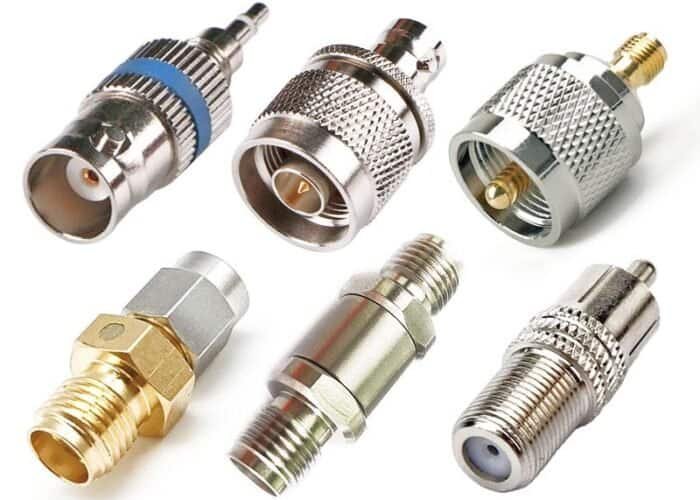
When it comes to transmitting signals, RF cables and coaxial cables are often mentioned together, but they’re not quite the same. If you’re looking to connect devices or set up a system, understanding their differences is key. A coaxial RF adapter can bridge compatibility gaps, making it a vital tool in many setups. This article breaks down what RF and coaxial cables are, how they differ, and where they’re used—all in simple terms for users.
What is a Coaxial Cable?
RG58 and RG6 represent two essential types of coaxial cables, engineered to deliver reliable RF signal transmission with minimal interference and robust durability across diverse applications. These cables are constructed with a central conductor, dielectric insulation, multiple shielding layers, and a protective outer jacket, ensuring consistent performance for test and measurement, video distribution, and communication systems that demand stable signal integrity. The distinct impedance and attenuation properties of these coax rf cable types make them ideal for specific configurations, effectively preserving signal quality over extended distances while reducing loss and electromagnetic interference. With superior impedance matching and mechanical strength, they simplify system integration, lower long-term maintenance costs, and enhance overall value. A wide selection of types of coaxial cables also supports broad frequency compatibility, environmental resistance, and easier installation, providing engineers with dependable solutions that accelerate deployment, extend service life, and ensure consistent operation even in challenging conditions.

Key Features of Coaxial Cables
- Shielding: Blocks external noise for clean signal transmission.
- Broad Use: Handles audio, video, and even RF signals.
- Tough Design: Built to withstand wear and environmental stress.
What is an RF Cable?
RF cables, or Understanding what is rf cable is essential for high-frequency applications. RF cables are specifically engineered to transmit signals between 3 kHz and 300 GHz with precision and minimal loss. While most RF coaxial cable assemblies utilize a coaxial structure, their primary function is the reliable delivery of radio frequency signals critical for professional systems.
Key Features of RF Cables
- High Frequency: Optimized for radio signals like those in wireless systems.
- Low Loss: Keeps signal strength intact over distance.
- Impedance Control: Matches system requirements (e.g., 50 or 75 ohms).
Core Differences Between RF Cable and Coaxial Cable
The distinction isn’t about construction—most RF cables are coaxial—but about purpose and performance:
- Purpose: RF cables target radio frequency signals; coaxial cables serve broader applications (RF, video, etc.).
- Optimization: RF cables prioritize low signal loss and impedance matching for RF use.
- Scope: Not all coaxial cables are built for RF—some handle lower frequencies or different signal types.
For example, a rf to coaxial cable might connect an RF cable to a device, ensuring seamless signal flow.
Role of Coaxial RF Adapters and Connectors
Adapters and connectors are essential for linking cables to equipment. They come in various forms to meet specific needs.
Types and Uses
- RF Coaxial Adapter Connector: Links different RF cable connector types (e.g., N-type to SMA).
- RF Coaxial Cable Adapter: Adapts an RF cable to a device’s port.
- Coaxial to RF Adapter: Converts a standard coaxial setup for RF use.
- RF Coax Adapter: Ensures compatibility in RF systems.
- Coaxial RF Cable: Refers to coaxial cables optimized for RF signals.
- Coaxial RF Connectors: Endpoints for connecting RF cables to hardware.
These components maintain signal quality and flexibility, especially in complex setups.
Applications in Real-World Scenarios
Both types of rf cables shine in different contexts, driven by their design and capabilities.
Coaxial Cable Uses
- TV Networks: Understanding coaxial cable types is fundamental for broadcast and distribution systems. RF cables transmit television signals from broadcast hubs to end users across residential, commercial, and hospitality environments. These cables form the core of scalable and interference-resistant signal delivery networks. For operators and service providers, selecting the right coaxial cable types ensures minimal signal loss, broader frequency support, and consistent channel integrity across extensive infrastructures. Optimize signal clarity, reduce maintenance, and future-proof your television distribution network with advanced RF coaxial solutions.
- Internet: Powers broadband with reliable connectivity.
- Telecom: Supports multi-signal telephone lines.
RF Cable Uses
- Antennas: Connects to transmitters for broadcasting.
- Wireless Systems: Key in Wi-Fi and cellular networks.
- Radio: Ensures clear signal delivery in stations.
Need a custom solution? Our RF cable adapters can meet your specific project demands.
How to Choose the Right Cable
Picking the right cable depends on your setup:
- Signal Needs: RF cables for radio signals; coaxial for mixed uses.
- Frequency: Check the cable’s range against your application.
- Impedance: Match it to your system (e.g., 50 ohms for RF).
- Length: Opt for low-loss cables for longer runs.
- Connectors: Use a coaxial RF adapter if connector types differ.
Conclusion
As trusted rf coaxial cable manufacturers, we enable optimal integration of RF and coaxial cables for high-performance professional systems. Understanding that RF cables excel in high-frequency transmission while coaxial cables provide versatile durability, our solutions such as rf coax connectors and coaxial RF adapters ensure precise impedance matching and signal integrity. Our high-frequency RF coaxial cables minimize insertion loss across wide rf cable frequency ranges, delivering reliable performance in millimeter-wave bands. We offer custom assemblies, including USB to RF cable variants and RF cable male to male assemblies, all produced under stringent quality control to meet exact specifications. These products provide tighter tolerances, repeatable performance, and simplified procurement for system integrators and OEMs. Beyond this, we address installation complexity and environmental challenges with ready-to-use options and custom-length cables, accelerating deployment, optimizing layouts, and reducing total cost of ownership while ensuring robust operation in critical environments. Our expertise also solves signal interference and enhances system longevity through tailored designs and responsive support.
Coaxial Cable Assembly
Microwave Test Cable
Coaxial RF Connector
Coaxial RF Adapter
Coaxial RF Termination
Coaxial RF Test Probe
Coaxial RF Attenuator
RF Switches
Coaxial RF Power Dividers